
Your Complete Guide to Applying the Changing Foundation
The tips, techniques, and common mistakes that separate "it was fine" from "this is my holy grail." From Ruby and 45,300+ Legacare customers.
5 minute read
Prep Your Skin First
Your foundation is only as good as the skin underneath it.
The Changing Foundation uses micro-encapsulated pigments that respond to your skin's natural pH and tone. They need a smooth, moisturised surface to do their best work. Skipping this step is the most common reason women don't get the results they expected on their first try.
Start by cleansing and applying your regular moisturiser. Then wait. A full five minutes. This part matters more than most women realise. The moisturiser needs to absorb completely into your skin before you apply anything over it. If it's still sitting on the surface, the pigment capsules will blend into the moisturiser layer instead of responding to your skin directly, and the colour match won't be as seamless.
If you use a separate SPF, apply it after moisturiser and before foundation. One of our customers from New Zealand shared a tip that's become a favourite in the community: applying sunscreen first creates an even dewier finish because of the extra glide.
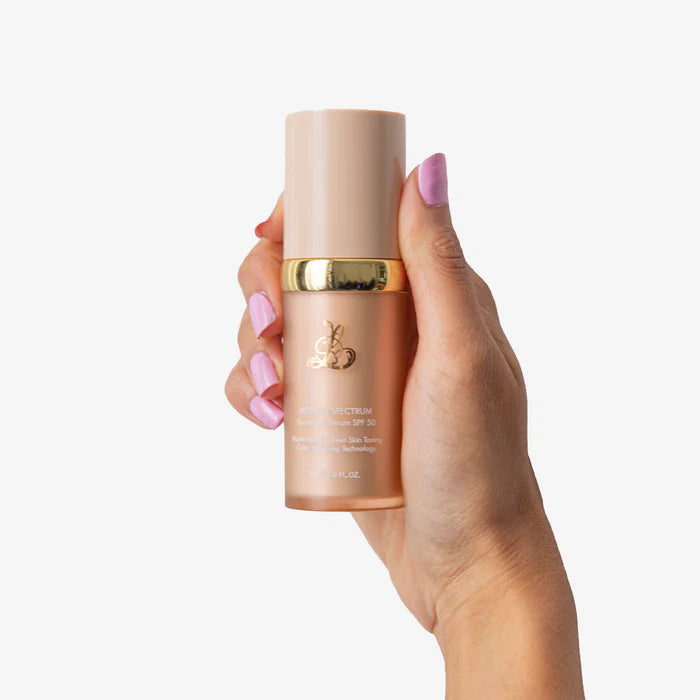
That said, the Changing Foundation already includes SPF 50 protection built into the formula, along with Hyaluronic Acid for hydration, Collagen for elasticity support, and Vitamin E for antioxidant protection. So for daily wear, you're already getting sun protection and skincare benefits with every application without adding extra steps.
The 60-Second Routine
Four steps. One minute. Done.
One Pump
Dispense one pump onto the back of your hand or directly onto your brush. One pump covers your entire face.
This is the single most important thing in this guide, and it's worth saying twice: one pump is enough. More product does not mean more coverage. It means the micro-encapsulated pigments crowd each other instead of adapting individually to your tone, which creates an uneven, heavier finish rather than the seamless one the formula is designed to deliver.
If one pump feels like too little, trust the process. Apply it, wait sixty seconds, then decide. Most women are surprised at how much coverage a single pump provides once it's had time to fully adapt.
The White Cream Is Normal
The product comes out of the bottle as a white cream. This is completely normal.
The colour is locked inside microscopic capsules that only release when they make contact with your skin. Within thirty seconds of blending, the white begins shifting. By sixty seconds, the colour match is complete.
"It's white coming out of the bottle, but looks clear when you apply it. Being a woman of 66, it didn't look cracked around my wrinkles." — Laura, United States
"I was so wary at first as it is white and seems to disappear on application so I thought am I going to be like The Emperor's new clothes?! But I love it." — Louise, Great Britain
Blend From the Centre Out
Start at the centre of your face — around your nose and cheeks — and work outward toward your hairline, jawline, and forehead. Use gentle, sweeping motions. The capsules break open with light pressure, so you don't need to press hard or buff aggressively. The hydrating base in the formula means the product glides rather than drags, especially on mature skin that tends to be drier. Let the product do the work.
Wait Sixty Seconds
Then stop. Don't add more product. Don't touch your face. Give the pigments a full sixty seconds to finish adapting.
The colour match you see at ten seconds is not the final result. The colour match you see at sixty seconds is. This is where most women make their biggest mistake — they panic at the halfway point and add a second pump before the first one has finished doing its job.
Choosing Your Tool
The tool you use matters more than you might think, and it matters specifically because of how colour-adapting technology works.
Damp Brush (Recommended)
A damp brush distributes capsule-breaking pressure evenly across your face, which means every pigment capsule gets activated consistently. The result is the most even, natural colour match. This is what the Legacare team recommends, and it's what the majority of our highest-rated reviewers use.
"I found it blended better with using the brush." — Patricia, Australia
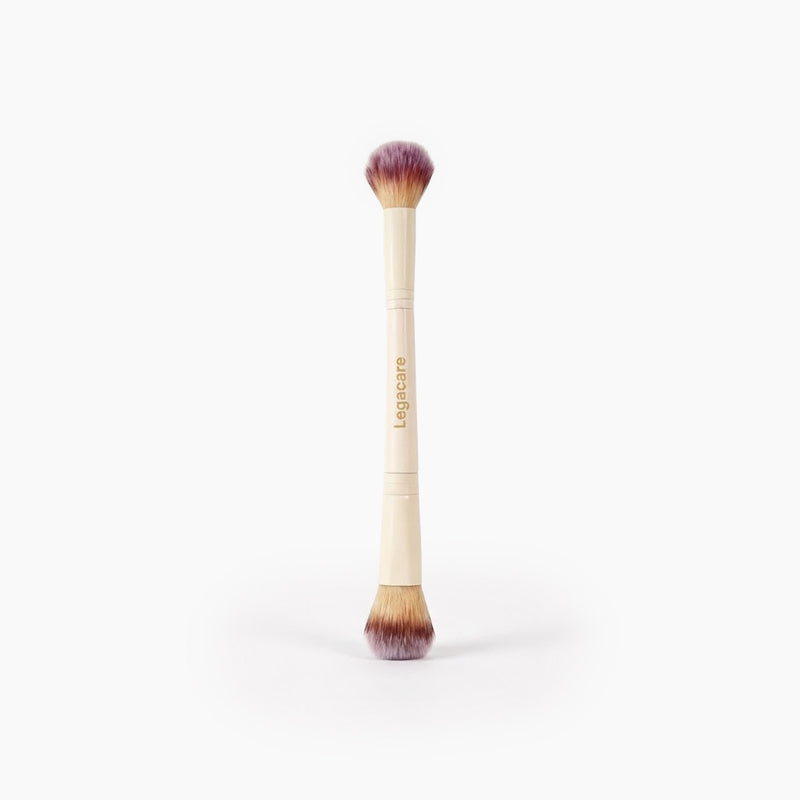
The Legacare 2-in-1 Build and Conceal Brush was designed specifically for this formula. The flat side covers large areas quickly, and the pointed tip handles precision work around your nose, under your eyes, and along your hairline.
Damp Beauty Sponge (Strong Alternative)
A damp beauty sponge works well, especially if you prefer a lighter, more sheer finish. The sponge absorbs slightly more product than a brush, so adjust accordingly. Bounce and press gently rather than dragging across the skin.
Fingers (Not Recommended)
Your fingers create uneven heat distribution, which breaks the pigment capsules inconsistently. Some areas get too much colour release while others don't get enough, which can leave white patches or an uneven tone. If you do prefer using your fingers, warm the product between your palms first and apply with patting motions rather than rubbing.
Building Your Coverage
The Changing Foundation is buildable. But the way you build coverage with it is different from traditional foundations.
Light — Everyday Wear
One pump, one thin layer, blend and done. This is the "your skin but better" finish that most customers describe as their daily look. The hydrating formula works with your skin's natural moisture rather than sitting on top of it, which is why so many women say it feels like wearing nothing at all.
Medium — A Little More Where You Need It
Apply one pump as your base layer. Wait sixty seconds for it to set fully. Then add a tiny amount — less than a quarter pump — only on areas that need more attention like age spots, redness around the nose, or dark circles. Blend that second touch with your fingertip or the pointed end of your brush.
"Easy to apply, good coverage with just a few drops, could apply more but not really needed." — Daniela, Australia
Full — Events, Photos, Special Occasions
Two thin layers. Apply the first pump as normal. Wait a full two minutes this time, not just sixty seconds. Then apply a second thin layer over the top. Follow with a targeted dab on any remaining spots. This is the technique for weddings, reunions, milestone birthdays, and photos where you want maximum coverage without the cakiness that traditional layering creates.
The principle at every level: build up thin layers. Never start heavy. You can always add more. You cannot subtract.
Skip the Powder
This is the tip that surprises the most women, especially if you've been setting your foundation with powder for decades.
The Changing Foundation is formulated to deliver a natural, dewy, skin-like finish. The hydrating ingredients — Hyaluronic Acid, Glycerin, Collagen — are there specifically to keep the formula feeling fresh and moisturised throughout the day. Setting powder fights against everything those ingredients are trying to do. On mature skin, powder settles into fine lines and creases within hours, absorbing the moisture from the formula and emphasising the very texture you're trying to smooth over.
Instead, use a hydrating setting mist. Hold the bottle about 20 centimetres from your face and mist lightly in a T or X motion. The mist locks everything in place without mattifying the finish or settling into lines.
The result by midday: your foundation still looks fresh, dewy, and natural instead of dry and cracked.
"My skin looks natural, just better. I will keep my old makeup for more dramatic events, but this will be my daily go-to." — Sharon, Australia
If you absolutely need to manage shine in your T-zone during warmer months, a very light dusting of translucent powder only on your forehead and the bridge of your nose is fine. Keep it away from your cheeks, the area around your eyes, and along your smile lines. Those are the places where powder does the most visible damage on mature skin.
Adjusting for the Seasons
The same basic technique works year-round, but small adjustments make a noticeable difference.
Summer and Humidity
Your skin produces more natural oil and moisture in warm weather. The foundation has more hydration to interact with, which means the coverage may feel slightly heavier than usual.
In summer, you can reduce the moisturiser layer underneath — or skip it entirely if your skin runs oily — and use half a pump instead of a full one. A damp sponge often gives a lighter, more breathable finish in heat. The dewy glow the formula creates actually looks its best in summer light.
Winter and Dry Conditions
Indoor heating and cold air dehydrate your skin significantly. The foundation has less moisture to work with, which means it needs more support underneath.
In winter, switch to a richer moisturiser and give it the full five minutes to absorb. You may find you need slightly more product than usual because drier skin absorbs more of the formula into the surface rather than letting it sit on top where the capsules can activate properly.
If you notice the foundation settling into fine lines more than usual during winter, the issue is almost always the skin underneath, not the foundation itself. A heavier moisturiser base and a hydrating mist to finish will solve this immediately. The Hyaluronic Acid in the formula works by drawing moisture to the skin — but it needs moisture to be present in order to draw it. In a dehydrated environment, giving it that base layer to work with makes all the difference.
The 5 Most Common Mistakes
After talking to thousands of women, the same five problems come up over and over. Most are fixable in under a minute.
Using Too Much Product
This is the number one issue by a wide margin. It's instinctive to add more when you feel like the coverage isn't enough, but with micro-encapsulated pigments, thickness is the enemy of performance. One pump. Start there every single time.
Not Waiting for Moisturiser to Absorb
If the foundation goes onto a wet or half-absorbed moisturiser layer, the capsules interact with the moisturiser instead of your skin. The result is patchy colour matching and a finish that moves around throughout the day. Five minutes feels like a long time when you're getting ready, but it's the single easiest fix for inconsistent results.
Judging the Colour Too Quickly
The foundation starts white. By thirty seconds it's shifting. By sixty seconds it's matched. If you panic at the ten-second mark and add more product, you've doubled your coverage before the first layer has finished adapting. Wait the full minute before making any decisions.
Over-Powdering
Powder and mature skin are not friends, especially with a hydrating, dewy-finish formula. This foundation is designed to work with moisture, not against it. Setting powder strips that moisture and flattens the natural glow. Switch to a mist.
Using Dirty or Dry Tools
A dirty brush carries old product residue that interferes with fresh capsule activation. A dry brush creates too much friction and absorbs product instead of depositing it. Wash your brush weekly. Dampen it before every application. The dampness helps the product glide and ensures even capsule distribution.
Your Foundation in Different Lighting
Your foundation looks slightly different in different rooms, and that's not a problem with the product.
Under natural daylight, the colour match looks its most seamless and true to life. This is the best light for assessing your application.
Under warm indoor lighting, the foundation may appear slightly warmer or dewier. This is flattering and it's how most people will see you in social settings.
Under fluorescent or office lighting, the tone may shift slightly cooler compared to what you saw in your bathroom mirror. This happens with every foundation on the market — it's the light source, not the product. The capsules adapted to your skin correctly. The light is simply revealing different tones in your natural complexion.
If you're applying in a bathroom with overhead lighting, step near a window before you decide the colour is off. It probably isn't.
Tips From Real Customers
These come directly from verified Legacare customers. Real women, real experiences, in their own words.
"I find it works better for me if I apply sunscreen first. I find it glides on creating an even more dewy look." — Samantha, New Zealand
"Easy to apply, good coverage with just a few drops, could apply more but not really needed." — Daniela, Australia
"I found it blended better with using the brush." — Patricia, Australia
"It's so cool how it changes from white to my natural skin colour." — Carole, California
"I've been using this foundation for a few days now. The best thing is it really does last all day. I will definitely be ordering some more." — Davina, Great Britain
"My skin looks natural, just better. I will keep my old makeup for more dramatic events, but this will be my daily go-to." — Sharon, Australia
The Cheat Sheet
Moisturise, then wait five minutes.
One pump on a damp brush.
Blend from centre outward.
Wait sixty seconds before adding more.
Build coverage in thin layers. Never start heavy.
Skip the powder. Use a hydrating setting mist.
Clean your brush weekly. Dampen before every use.
Every skin is different, and we know that trying a new foundation — especially one that works differently from anything you've used before — takes a little trust and a little patience. The Changing Foundation includes SPF 50 protection, Hyaluronic Acid, Collagen, and Vitamin E working for your skin while it covers it. But the real results come from the technique.
If you've followed this guide and something still doesn't feel right, reach out. Ruby and the Legacare team read every message.