
The Real Reason Foundation Settles After 45 (And How Legacare Fixed It)
You used to put on foundation in two minutes. It looked good all day. Then somewhere around your mid-forties, the same routine started showing every line you didn't know you had.
That isn't a technique problem. It isn't your skin getting "worse." It's a structural shift, and most foundations were never designed to account for it.
Here's what's actually happening on 45+ skin, and what the Legacare Changing Foundation does differently.
What Changes in Your Skin After 45
Three things happen, roughly in the lead-up to and through menopause.
Collagen drops fast. Research shows women lose around 30% of dermal collagen in the first five years after menopause. Collagen is the scaffolding that keeps skin firm and smooth. When it depletes, the surface develops fine creases that weren't there before.
Skin gets drier. Estrogen helps skin hold onto moisture. As estrogen falls, the skin's ability to retain water falls with it. Drier skin grips onto whatever sits on top of it instead of letting it glide.
Skin thins. Thinner skin shows texture more visibly. Anything heavy or chalky now reads as a layer, not as a finish.
Put these three together and you get the exact problem so many women describe in the same words: my foundation settles into every line by lunchtime.
That isn't the foundation failing on the day. It's the foundation being formulated for a different skin entirely.
Where Most Foundations Get It Wrong
Traditional foundations are pigment suspended in a base. The pigment sits ON the skin. On younger, plumper, more hydrated skin, that works. The pigment film looks even because the surface underneath is even.
On skin that's lost collagen, lost hydration, and become more textured, the same pigment film has nowhere flat to sit. So it sinks into the creases. Heavier coverage makes it worse, because more pigment means more material to pool in the lines. Powder makes it worse, because it absorbs what little hydration is left and grips the texture.
This is the trap most women fall into. The instinct is to add more coverage. The fix is to change the mechanism.
How Legacare Was Built Differently
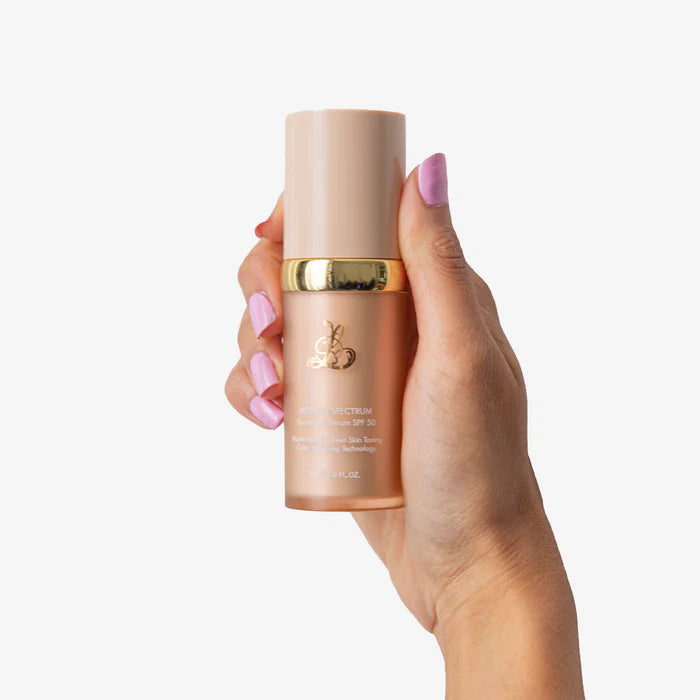
The Changing Foundation uses micro-encapsulated pigment technology. Instead of mixing pigment into a base, each colour pigment is sealed inside a microscopic cellulose-coated sphere.
Three things follow from that.
The pigment glides instead of sitting. Those tiny spheres behave like ball bearings on the skin's surface. They move across texture rather than pooling inside it. That's the structural reason the foundation doesn't crease the way a traditional formula does.
Coverage is controlled by you, not the bottle. The more you blend, the more capsules release their colour. Sheer where you want it sheer. Buildable where you want more coverage. You're never forced to apply a heavy layer to get the finish you want.
The base is doing skincare while it sits on your face. Hyaluronic acid pulls water into the skin and holds it there. Collagen and Vitamin E support the surface throughout the day. Properly hydrated skin is the single biggest factor in stopping settling, so the formula is treating the cause while it covers.
SPF 50 sits in the bottle too. You'll notice that one less in the mirror and more over the years.
The Practical Difference
The Changing Foundation was built around one principle: the foundation should work with mature skin, not against it. That means lighter wear, no pooling in fine lines, hydration that lasts, and one product replacing four (primer, foundation, concealer, SPF).
Every bottle comes with the 30-Day Perfect Match Guarantee. If it doesn't sit the way you want it to, send it back.
Ruby Founder, Legacare