
Last updated: dec 7, 2025
I watched the beauty industry fail my mum and quietly take her confidence away.
7-10 min read time

Words by
Ruby L. Pearson
7-10 min read time
Share


Published on: Oct 7, 2025

I didn’t start this because I wanted a beauty brand.
I started because I watched my own mum slowly lose confidence over something that had never been a problem before.
She hadn’t forgotten how to do her makeup, she’d been doing it the same way for years.
And she didn’t just “age badly” that’s for sure.
What changed was how makeup started behaving on her skin.
Foundations that once looked effortless began settling into lines.
They cracked after a few hours.
They left her skin looking uneven and tired.
No matter the brand, the price, or the promise on the bottle, the result was always the same.
It made her look older than she was.
And as a daughter, the hardest part was watching her assume that she was the problem in all of this.
That she was doing something wrong, that this was just what getting older looked like.
Over time, I started hearing the same comments slip out, almost casually like it had become the norm.
She’d say things like,
“Maybe my skin just isn’t what it used to be.”
“Maybe this is just what happens when you get older.”
And to me it made no sense.
Because nothing about her had suddenly changed.
Her habits were the same.
Her routine was the same.
Her care for herself was the same.
The only thing that kept failing her was the makeup.

Products she’d trusted for years now started behaving differently.
Yet she kept blaming herself.
And it was breaking my heart, seeing her like that.
I just knew something wasn’t right
So I started paying closer attention.
Not to my mum’s skin, but to the products themselves.
Every new foundation she tried sounded almost identical to the last one.
“Lightweight.”
“Long-wearing.”
“Flawless finish.”
“Age-defying.”
All different brands with different price points.
Watching my mum pile product on top of product just to feel presentable was one of the hardest things I’ve ever experienced.

Because she wasn’t asking to look younger.
She just wanted her makeup to stop working against her.
See the solution I built to make makeup work again.
I felt helpless, seeing her struggle, and seeing what impact it had on her mentally and physically was the last straw.
I had to get to the bottom of this.
I Googled.
Late at night, I’d sit with my laptop and search up things like:
“Why does foundation crack on mature skin?”
“Why does makeup settle more after 50?”
I ended up in forums filled with women saying the same things my mum was saying out loud.
All from different countries, using different brands, all sharing the same frustration.
I saw women blaming themselves,
Their technique.
Their age.
What stood out to me wasn’t the complaints, it was how vague all the answers were.
Most advice boiled down to “try this product” or “add this step.”
But no one ever explained why all of this kept happening.
So I went deeper.
I started reading ingredient lists, not just the pretty headlines.
I compared formulas side by side.
And slowly, a pattern started to appear.
The foundations that failed my mum weren’t “bad.”
They were just built for a completely different type of skin.
Most of them were packed with mattifiers.
Oil absorbers.
Film-formers designed to lock everything in place.
Great if you’re 25 and producing oil all day.
Not so great if your skin is drier, thinner, and more reactive than it used to be.
Whenever brands talked about testing, the imagery was always the same.
Young models with smooth skin in perfect studio lighting.

So I started looking for actual testing panels.
Who were they testing on?
What ages?
What skin conditions?
And the answers, more often than not, were disappointing.
Most formulas were never properly tested on women with hormonally shifting, mature skin.
They were adapted from existing formulas and lightly “repositioned.”
What that means is they kept the same base, and just added a new label.
Once I saw that, I couldn’t unsee it.
That's when I realised why everything my mum tried felt like a compromise.
Those products were never designed for her in the first place.
At first, I assumed someone else must've noticed this, surely there were brands working on it properly.
So I started reaching out to different people in the industry.
I emailed cosmetic chemists.
I spoke to manufacturers.
I asked suppliers questions most people weren’t bothered asking.
Questions like:
What actually happens to skin after 45 at a formulation level?
Why do mattifying agents behave differently after a certain age?
Why does pigment settle more as moisture levels drop?
Some were polite, some were dismissive or just straight up rude.
But there were a few who were honest.
They told me mature skin was “too niche.”
That reformulating properly would be way too expensive to be viable.
That sourcing gentler, higher-purity ingredients would slow production down too much.
In other words, it wasn’t that it couldn’t be done.
It just wasn’t convenient, and that was hard to hear.
Because the women paying the price for that convenience were women like my mum.
And that was the moment something shifted for me.
Because my mum didn’t deserve “convenient”.
She deserved something that actually worked.
So I stopped looking for a brand that already existed.
And I started asking a much harder question:
What would a foundation look like if it were designed from the ground up for women like her?
Once I understood what was actually happening, I couldn’t go back to pretending it was a small issue.
At first, I tried to let it go. I told myself this wasn’t my problem to solve, that surely someone bigger, better funded, more experienced would step in and do it properly.
But every time my mum reached for another bottle and sighed at the mirror, that thought felt like an excuse.
So I made a decision that scared me more than I like to admit.
If no one was going to build a foundation for women like her, I would try.
I didn’t have investors or a team, and I didn’t have a clear roadmap.
But what I had was a very short list of things I refused to compromise on. The formula had to hydrate without feeling heavy, move with the skin instead of sitting on top of it, and adapt to tone rather than forcing women to guess shades. Most importantly, it had to be built for skin after 45, not only adjusted for it.
That’s when the resistance really started to show.
The first chemist I spoke to told me what I was asking for was “unnecessarily complex.” Others pushed back more quietly, suggesting ingredients be removed to make the formula cheaper or easier to produce.
One supplier laughed and said, “Women your mum’s age don’t need all that.”
That comment stayed with me.
Not because it was rude, but because it revealed how low the bar had been set.
No one was asking what women deserved. They were asking what they would tolerate.
Every objection traced back to the same logic. Doing this properly would cost more, take longer, and be harder to scale than anyone was willing to accept. And every shortcut would have led straight back to the kind of formulas that weren’t working in the first place.
That’s when I stopped looking for answers in the usual places.
I started asking a different question. Where are women actually maintaining clarity and balance in their skin later into life?

That question kept pointing me east.
As I looked into how women in parts of East Asia approach pigmentation and tone as they age, a clear difference stood out. The focus wasn’t on aggressive correction or stripping skin back, but on supporting how skin behaves over time.
That’s how I came across Gentiana Scabra.
Not through beauty marketing, but through clinical research and traditional medicine literature. It’s a botanical that’s been used for centuries to help regulate uneven pigmentation, particularly when it’s driven by internal changes like hormones, rather than surface damage.

What I saw in my mum’s skin wasn’t something you could scrub away or peel off. It was skin that had lost its ability to stay even on its own.
Gentiana Scabra wasn’t harsh, it worked by helping skin gradually regain balance and clarity.
When I brought it back to manufacturers, the pushback was immediate. Proper sourcing would be slow. The purity levels needed would be expensive. Stabilising it in a foundation would be difficult.
I was told no one used it in makeup for a reason.
That’s how I knew I was on the right track.
Refusing shortcuts meant funding early samples myself and working through revision after revision before something finally worked. The first months were messy. Formulas separated, textures felt wrong, and pigments refused to behave the way they were supposed to.
There were moments where I genuinely wondered if everyone else was right, if this was impossible, if I was asking too much from a single product.
But then something would click.
A change in hydration ratios. A different way of encapsulating pigments. A better balance between coverage and flexibility. Slowly, the formula began to behave differently.
It stopped sitting on the skin and started blending into it. It didn’t crack as the skin moved. It stayed comfortable throughout the day.
The first time I saw it on my mum’s skin, I knew.
Not because it made her look 10 years younger, but because she stopped fussing with it.
She stopped checking the mirror every few minutes. For the first time in a long time, she just looked like herself again.

It was fixing something the industry stopped trying to solve.
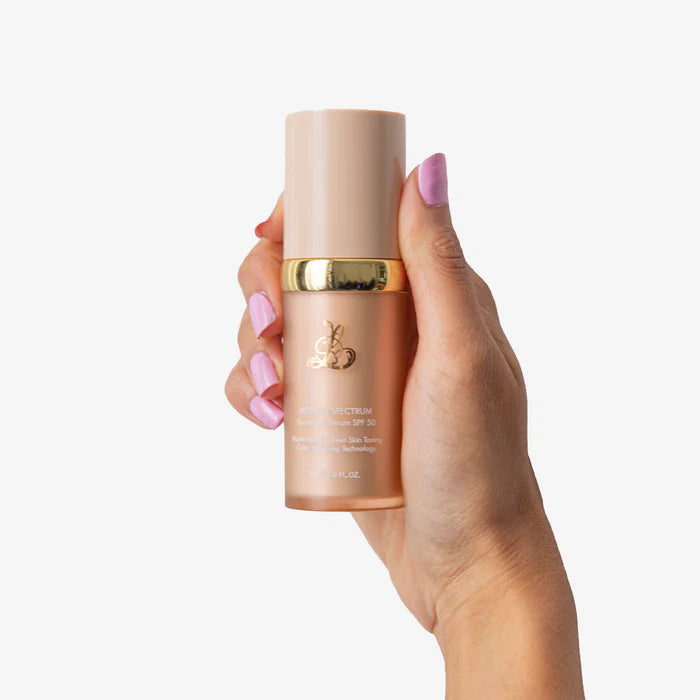
That formula became Legacare Adaptive Foundation. Not because the world needed another foundation, but because women like my mum needed one that actually understood their skin.
Try Legacare for yourself
Legacare was built around one simple idea.
If skin changes after 45, makeup has to change with it.
So the formula was designed to work with the skin rather than fight it. Texture is supported, hydration stays flexible, and pigment adapts as you apply it instead of sitting rigidly on the surface.
It comes out white, then blends into your exact skin tone, without undertone charts or trial and error.

It was built differently on purpose.
Not because I wanted it to sound impressive, but because every part of the formula had to earn its place. Nothing went in simply because it was common or easy to work with.
Uneven pigmentation needed to be addressed gently over time, not masked or stripped away, which is why ingredients like Gentiana Scabra mattered. Hydration had to support the skin so makeup wouldn’t settle, rather than drying it out to force longevity. Pigment needed to adapt as it met the skin, instead of sitting rigidly on the surface and exaggerating texture.
That approach comes with limits.
Some of the ingredients we use take months to grow and process properly. Others are difficult to stabilise unless they’re handled in small, controlled batches. That’s why Legacare isn’t produced at mass scale.
When a batch runs out, it’s gone until the next production cycle is ready.
Who This Is For
And Who It Isn’t
Legacare is for women who are done experimenting, and who are tired of feeling like makeup has become a daily frustration instead of something familiar and easy.
I built this for women who want to look like themselves again, rested, and confident in their own skin.
If you’re looking for heavy, mask-like coverage, this won’t be right for you. But if you want a foundation that works with your skin, this was made with you in mind.
Why I’m Sharing This Now
I didn’t build Legacare to chase trends or launch another product into an already crowded market.
I built it because my mum deserved better than what was available, and because I know how many women still feel exactly the way she did. Avoiding mirrors. Avoiding photos. Quietly assuming the problem is them.
It isn’t.
The products just weren’t made for this stage of life If you’ve been waiting for something that finally makes sense, this is your invitation to stop settling for less..
If Legacare is available right now, you can take a look and decide if it feels right for you. Small batches do mean we sell out, and when that happens it can take time to restock.
That’s all I ever wanted women to have.

Try Legacare for yourself
