
How to Apply Legacare Changing Foundation: The Complete Guide for Beautiful Results on Mature Skin
The 4 golden rules thousands of women discovered — and the one mistake to avoid
You already know how to apply foundation. This one's different.
You've been applying foundation for years — maybe decades. You know your way around a beauty sponge. You know the difference between a stipple and a blend.
So we're not going to teach you how to put on makeup.
What we are going to do is share something we've learned from thousands of women who've tried Legacare's Changing Foundation. Because this product doesn't work like other foundations. It looks different. It feels different. And when you apply it the way you've always applied foundation, you might not get the results you're expecting.
The women who absolutely love this product — and there are a lot of them — all figured out the same four things. Some discovered them on their first try. Others learned after a few days of experimenting. And once they made these small adjustments, the results changed completely.
Here are those four things.
First, let's talk about what makes this foundation unusual
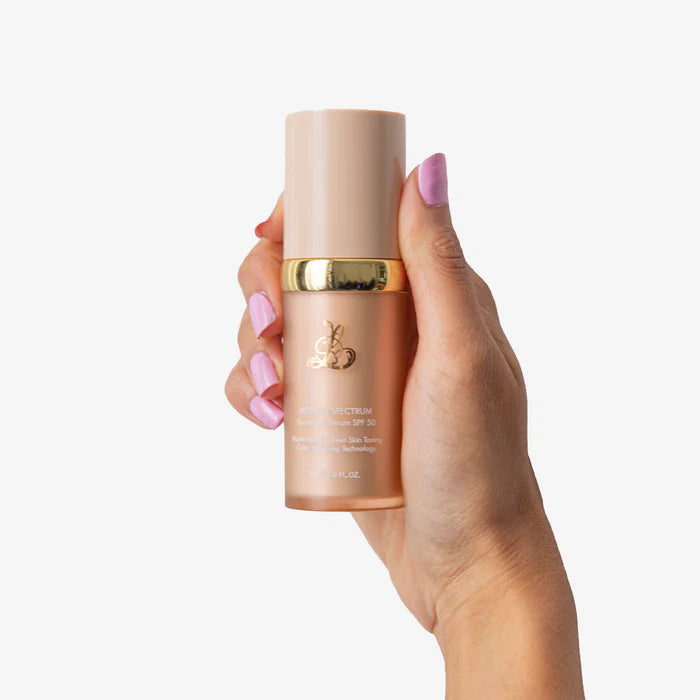
When you pump Legacare out of the bottle, it's white.
Not beige. Not tinted. White.
If you've never used a colour-adapting foundation before, this can be a bit startling. Laura, 66, from the US put it perfectly: she said the product is white coming out of the bottle, but looks clear when you apply it — and being a woman of 66, it didn't look cracked around her wrinkles and didn't look caked or like she was wearing a mask.
Another customer, Mrs Louise A Williams from the UK, was so wary at first because it was white and seemed to disappear on application — she thought she'd end up like The Emperor's new clothes. But she ended up absolutely loving it.
So here's what's happening: Legacare uses something called micro-encapsulated pigment technology. Imagine tiny, microscopic capsules — each one filled with colour pigment and coated in a protective shell. When the foundation comes out of the bottle, those capsules are still sealed, which is why it appears white.
When you blend it onto your skin, the gentle pressure from your fingers or brush breaks open those capsules. The pigments release and interact with your skin chemistry — your natural warmth, your pH, your unique undertone — to create your shade. Not a factory-mixed shade. Your shade.
This is why there's no shade matching with Legacare. No guessing between "ivory" and "porcelain" and "fair beige." Your skin determines the colour.
But it also means the way you apply it matters more than with a traditional foundation. Not because it's complicated — it's actually simpler. But because a few small choices make a big difference in how the final result looks and lasts.
The 4 Golden Rules
These aren't instructions from our marketing team. These are discoveries from real women who use Legacare every day. We've listened to thousands of them, and the same tips keep coming up over and over again.
Rule 1: Always start with moisturised skin
This is the single most important step. It's also the one that's easiest to skip when you're rushing out the door.
Legacare's formula is designed to work with hydrated skin. When your skin is properly moisturised, the foundation glides over the surface smoothly, the micro-encapsulated pigments release evenly, and the finish looks natural and dewy — not patchy or dry.
When you skip moisturiser, especially if you have dry or mature skin, the formula can cling to dry patches instead of gliding over them. This is what causes the "settling into lines" effect that no one wants.
Here's the routine:
After cleansing, apply your regular moisturiser (or a sunscreen, which works beautifully as a base). Then — and this is the key part — wait about 5 to 10 minutes before applying Legacare. You want your moisturiser to be fully absorbed, not sitting wet on the surface. A slightly tacky feel is ideal. Fully wet is too soon.
Samantha from New Zealand shared a great tip: she finds it works better when she applies sunscreen first, even though Legacare has SPF 50 built in. She said it glides on better and creates an even more dewy look. This is a lovely option if you prefer an extra-luminous finish.
Why this works: Hydrated skin creates a smooth, even canvas. The micro-encapsulated pigments can release evenly across the surface instead of getting trapped in dry patches or textured areas. Think of it like painting on a primed canvas versus painting on rough sandpaper — the surface you start with determines the finish you get.
If you have very dry skin: Consider using a hydrating serum (like a hyaluronic acid serum) underneath your moisturiser for extra plumping. Some customers with very dry skin have found that this extra layer of hydration makes a noticeable difference in how the foundation sits throughout the day.
If you have oily skin: You still need to moisturise. Use a lightweight, oil-free moisturiser. Skipping it will actually cause your skin to produce more oil throughout the day, which can break down any foundation faster. A properly moisturised oily skin wears foundation better than a dehydrated one.
Rule 2: Less is more — start with a small amount and build
This might be the most counterintuitive rule, especially if you're used to foundations that require a generous amount for decent coverage.
Legacare is concentrated. A little goes a long way.
Daniela from Australia summed it up: she said it gives good coverage with just a few drops, and you could apply more but it's not really needed. Her face looks fresh and dewy all day.
Here's how to do it:
Pump once onto the back of your hand. You'll see a small amount of white cream — roughly the size of a five-cent coin. That's your starting point for your entire face.
Using your brush, sponge, or fingers, dot small amounts across your forehead, cheeks, nose, and chin. Then blend outward from the centre of your face.
Here's the magic of micro-encapsulated pigments: the coverage builds with blending. The more you blend, the more capsules break open, and the more pigment releases. So rather than applying a thick layer all at once, you build coverage gradually, exactly where you need it.
The layering technique for areas that need more coverage:
For age spots, redness, dark circles, or areas of discolouration, let your first layer set for about 30 seconds. Then go back with a tiny amount — less than you think — and stipple (gently pat, don't drag) over just those areas. This builds coverage precisely where you need it without creating a heavy, mask-like feel.
Tracy, 65, from the US has age spots and red spots on her face, primarily her T-zone area. She found this product covers nicely, blends to her skin tone and is easy to use. She said for the first time in many years she's actually in love with a face product.
The most common mistake with amount: Using too much product. When you apply too much at once, the foundation doesn't blend as smoothly, can look uneven as it adapts, and can feel heavier on the skin. It's much easier to add a small amount than to take away excess. If you feel like you've applied too much, use a damp sponge to lightly bounce over the area — this will pick up excess product and blend what remains.
A note on the colour-adapting process: After blending, give it about 30 seconds to fully adapt to your skin tone. The final colour might not appear instantly. Resist the urge to add more product during these 30 seconds — what looks too light initially will deepen as the pigments respond to your skin. Many women have found that what seemed like "not enough" at first turned out to be the perfect amount once the colour settled.
Rule 3: Use a brush or damp sponge for the best blend
Your fingers work. Let's get that out of the way first. Plenty of women apply Legacare with their fingers and get lovely results. Fingers have the advantage of warmth, which can help break open the pigment capsules.
But if you want the most even, polished finish — especially around areas with fine lines, larger pores, or textured skin — a brush or damp beauty sponge makes a noticeable difference.
Patricia from Australia found it blended better using the brush.
Here's why tools make a difference on mature skin:
Fingers tend to drag the skin. And when you drag mature skin during foundation application, you can inadvertently push product into lines and creases rather than gliding over them. A brush or sponge applies with lighter, more even pressure.
The brush technique:
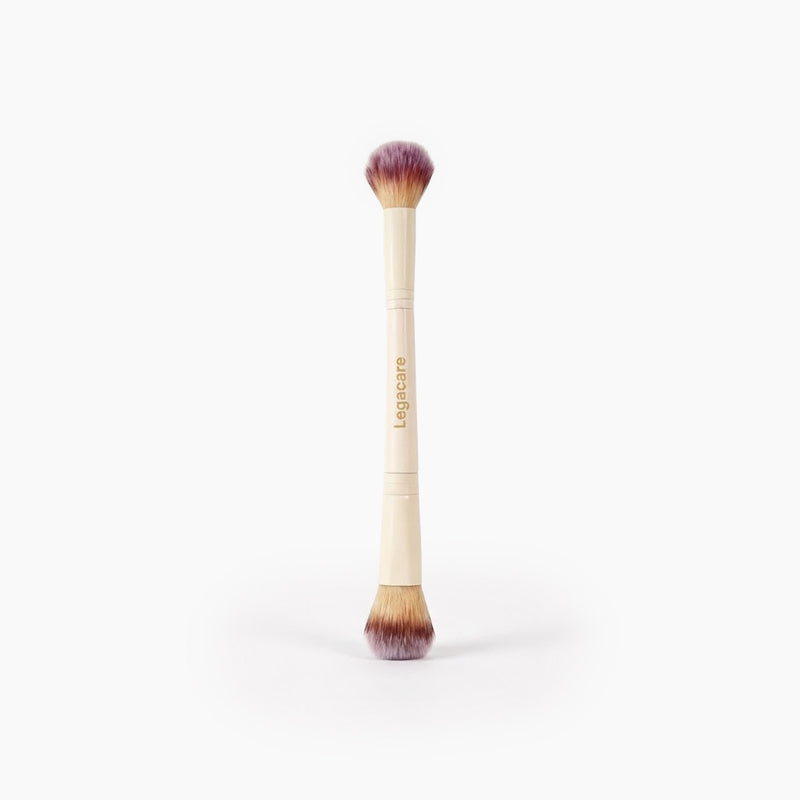
Use a flat-top kabuki brush or a stippling brush. Apply in short, light strokes — blending from the centre of your face outward. The brush bristles create a smooth, airbrushed effect and distribute the product evenly without pushing it into fine lines. Legacare's own 2-in-1 Build & Conceal Brush was designed specifically for this formula, but any good quality foundation brush works.
For areas around the eyes, nose creases, and smile lines, use the edge of the brush with very light pressure. These are the areas where product is most likely to settle, so a light hand here makes all the difference.
The damp sponge technique:
Wet your beauty sponge thoroughly, then squeeze out the excess water until it's damp — not dripping. A damp sponge does two things: it prevents the sponge from absorbing too much product (so you're not wasting it), and it creates a beautiful, natural, skin-like finish.
Use a bouncing motion — stippling, not dragging. Press lightly and bounce across each area. This technique is especially good for areas with fine lines because the bouncing motion deposits product on top of texture rather than pushing it into texture.
The combination approach (a favourite among experienced users):
Many Legacare customers use fingers to warm up and initially spread the product, then go over everything with a damp sponge for a smooth, even finish. This gives you the capsule-breaking warmth of fingers with the polished finish of a sponge. It's the best of both worlds.
How to clean your tools:
Clean your brush or sponge at least once a week. Product buildup on tools affects how evenly they apply foundation — and on mature skin, which can be more reactive, clean tools also reduce the risk of irritation. A gentle brush cleanser or even a mild shampoo works well.
Rule 4: Set with a hydrating mist, NOT powder
This is the big one. If you take nothing else away from this guide, let it be this.
Do not set Legacare with powder.
We know. It goes against everything you've done for the last 30 years. Setting powder has been the final step in foundation application for as long as most of us can remember. It's practically muscle memory.
But here's what customers discovered: powder is the primary cause of the "settling into lines" effect that makes foundation look ageing.
When you apply powder over Legacare (or any foundation on mature skin), the powder sits on the surface and draws moisture out of the formula. This causes the foundation to stiffen and dry down into a flat, matte film — and that film cracks and creases wherever your skin moves. Around your eyes. Around your mouth. Along your forehead. Every expression line becomes highlighted.
What to do instead:
After you've blended your foundation and let it set for about 60 seconds, mist your face with a hydrating setting spray. Hold the bottle about 20-30cm (8-12 inches) from your face and give it 2-3 light spritzes. Let it air dry — don't pat it in.
A hydrating mist does the opposite of powder. Instead of stripping moisture, it locks it in. It sets the foundation in place while keeping the formula flexible and dewy. The result? A finish that moves with your face instead of cracking against it. Foundation that looks as good at 5pm as it did at 8am.
Which mist to use:
Any hydrating setting spray works — you don't need anything expensive or specific. Look for one with hydrating ingredients like hyaluronic acid, glycerin, or aloe vera. Legacare's own Moisturising Setting Spray was formulated to work with the Changing Foundation, but any quality hydrating mist will do the job.
Avoid mists that are labelled "mattifying" or "oil-control" — these work like powder in spray form and will have the same drying, line-emphasising effect.
If you really struggle with oil through the day:
Instead of powder across your whole face, use a tiny amount of loose translucent powder ONLY on your T-zone (forehead, nose, chin) and leave the rest of your face set with mist. The areas around your eyes, mouth, and cheeks are where lines are most visible, so keeping those areas powder-free and hydrated is where you'll see the biggest difference.
Davina from the UK shared: She'd been using Legacare for a few days and the best thing, she said, is it really does last all day. She planned to order more. And Kim from Australia found that it feels light and not heavy, even in the Aussie summer heat — it changes to match her skin colour and gives just the right amount of coverage.
That all-day wear? It comes from the formula staying flexible and hydrated. Powder undermines that.
The complete routine, from start to finish
Here's everything above, consolidated into a simple morning routine that takes about 60 seconds of active application time:
Prep (5-10 minutes before you apply): Cleanse your face. Apply your moisturiser or sunscreen. Let it absorb fully. Your skin should feel hydrated and slightly tacky, not wet.
Apply (about 30 seconds): Pump a small amount of Legacare onto the back of your hand. Dot it across your forehead, cheeks, nose, and chin. Using your brush or damp sponge, blend from the centre outward in light strokes or bouncing motions.
Wait (30 seconds): Let the colour adapt. Watch it transform from white to your shade. This is the micro-encapsulated pigments at work. Resist adding more during this time.
Build if needed (15 seconds): Check coverage. If you want more in specific areas — age spots, redness, under-eye circles — add a tiny amount and stipple gently over just those spots.
Set (5 seconds): 2-3 spritzes of hydrating mist, held at arm's length. Let it air dry. Done.
That's it. No shade matching. No guessing. No powder. Your skin does the work.
Troubleshooting: common questions answered
"It looks too light when I first apply it." This is completely normal. The micro-encapsulated pigments need about 30 seconds of blending and skin contact to fully release their colour. What looks too light at first will deepen as it adapts. Wait before adding more product.
"It's settling into my fine lines." Three things to check: Did you moisturise first and let it absorb? Are you using too much product? Did you set with powder instead of mist? In most cases, one of these three is the cause. Try less product, more moisture, and mist instead of powder. The difference is usually immediate.
"It looks orange on me." This is almost always caused by the foundation mixing with moisturiser that hasn't fully absorbed. If your moisturiser is still wet on the surface, the pigments interact with the cream rather than your skin, which can throw off the colour. Wait a full 5-10 minutes after moisturising. If you're in a hurry, blot with a tissue first.
"It doesn't seem to provide enough coverage." Remember: build in thin layers. One thin layer gives a natural, my-skin-but-better look. Two layers in specific areas gives medium coverage. Three layers in targeted spots gives near-full coverage. The buildable nature is one of the product's strengths — you control exactly how much coverage you want, where you want it.
"It wears off by lunchtime." Check your setting method — mist, not powder. Also make sure your moisturiser or sunscreen base isn't too heavy or greasy, as an overly slippery base can cause any foundation to slide. A lightweight, fast-absorbing moisturiser works best. Gaylene from Australia found she's actually not spending as much time getting ready now, and her foundation lasts because she's using the right base and setting method.
"My skin is really dry and it's clinging to dry patches." Double up on hydration. Use a hydrating serum underneath your moisturiser, wait for it to absorb, then apply Legacare. You can also try mixing a single drop of facial oil into your moisturiser before applying. Linda from Australia has dry skin and found that it feels like a moisturiser with no caking and looks natural.
"I'm 70+ and worried it won't work for me." One customer is 77 and never could find the right shade. She's medium-toned and when she used Legacare, it immediately blended right in. Another customer, Lynn, is 60 with wrinkles and rarely wears foundation — but she said this one does a very good job when she wants to wear makeup, and it doesn't make her face look cracked. The key for more mature skin: generous moisturiser, thin layers, and a brush or sponge rather than fingers.
What you'll need
Here's a quick checklist of everything mentioned in this guide:
Essential: Your Legacare Changing Foundation, a good moisturiser, and a hydrating setting mist.
Recommended: A foundation brush or damp beauty sponge.
Optional but lovely: A sunscreen to use as a base (for extra dewiness), a hydrating serum (for very dry skin), and Legacare's Moisturising Setting Spray.
That's your complete toolkit. Simple, straightforward, and everything you need for a flawless result.
One last thing
Julie from Australia said something that stuck with us. She's not a makeup person — everything she'd ever tried sat in her age lines and made her look and feel, in her words, like mutton dressed up as lamb. She was very sceptical about Legacare. It sat in her bathroom for a few days because she didn't want to be disappointed again. When she finally tried it, she was very surprised it went on smoothly, felt light on her skin, and didn't highlight her age lines. Her skin looked healthier and even-toned.
The difference wasn't just the product. It was how she used it.
These four rules — moisturise first, less is more, use the right tool, mist instead of powder — are the difference between "it's okay" and "where has this been all my life?"
You deserve the second one.
Have questions about applying your Legacare? Our team is here to help — just reply to any of our emails or contact us at. We're real people and we genuinely want you to love your results.